🥕
Tending the crop…
Stay ahead of the 2027 growing season — first month free on any plan until January 1st
Tending the crop…
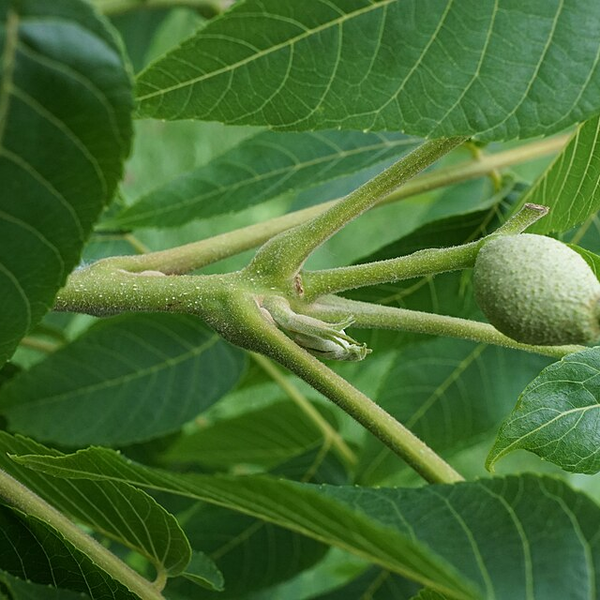
A magnificent shade-and-nut tree — and the garden's most famous chemical antagonist. Juglone from its roots suppresses tomatoes, peppers, and potatoes within striking distance. Plant it where its 60-foot canopy can't bully your beds.
One black walnut plant produces roughly 50 lbs. Worth $249.50 vs a $24.99 seed cost.
Lineages for your homestead goals
A heavy-bearing cultivar with crackable nuts — the standard for home orchards.
A fast-growing, early-bearing hybrid — nuts in 5-6 years instead of 10.
A northern-hardy cultivar with excellent nut quality for cold zones.
Soil · Water · First 30 days · Monthly care · Troubleshooting · Harvest
Deep, fertile, well-draining soil. pH 6.0–7.5. Walnut trees want real depth for their taproot and they get enormous — this is a 60+ foot specimen tree, not a garden plant. Give it room and it gives you a century of nuts and shade.
Deep, infrequent water for the first 2 years while establishing — 2 inches every 2 weeks — then none; mature walnut trees have taproots that find their own water.
Juglone — walnut roots and leaves release a toxin that kills tomatoes, peppers, potatoes, and most garden crops. This is real and permanent: only daylilies, hostas, and beans are juglone-tolerant companions. Plan around a walnut or don't plant one.
🌿 Find remedies →Looks alarming in the husk, rarely ruins the nutmeat. Pick up dropped nuts promptly and clean the ground in fall to break the cycle.
🌿 Find remedies →You cut in spring. Walnut bleeds heavily then; prune in deep winter (December–January) and wounds heal clean.
🌿 Find remedies →Collect nuts when husks split and drop to the ground — usually late September to November depending on zone. Remove husks (gloves — the husk stains badly), wash, and cure.
Cure nuts in a single layer in a dry, airy spot for 2–3 weeks, then store in-shell in a cool place for a year. Shelled walnut pieces freeze for 2 years in airtight bags.