
Plant garlic in the wrong week and you’ll be staring at a tray of mushy cloves by spring. Plant it in the right window — two to four weeks before the ground freezes — and you’ll pull fat, peelable bulbs next June without thinking about it again until harvest. The whole trick of garlic is that it only happens on nature’s schedule, not yours. And for most of the country, that schedule is right now.
Garlic needs a real winter to form bulbs. Each clove carries a tiny biological program that only starts after weeks of cold, and the plant won’t build a proper bulb without it. Gardeners call the process vernalization, and it’s why you cannot simply plant garlic in March and make up the time. Fall planting gives the clove time to grow roots before the ground hardens, then the winter chill does its work, and spring growth pushes straight into bulb formation. Miss the fall window and you’re waiting an entire year for the next one.
Nail the Timing, Zone by Zone
The rule that has served me well here in the Carolinas: aim for two to four weeks before the ground freezes solid, usually a couple of weeks after the first hard frost. If that sounds vague, the reliable shortcut is to plant anytime from around Halloween through early December in most zones — colder zones plant earlier, mild ones later. Your zone’s first-frost date is the anchor, but garlic wants soil in the forties, not frozen hard ground.
Not sure where your first frost lands? Look up your zone and sketch the bed in the free planner before you dig.
How to Plant It Right
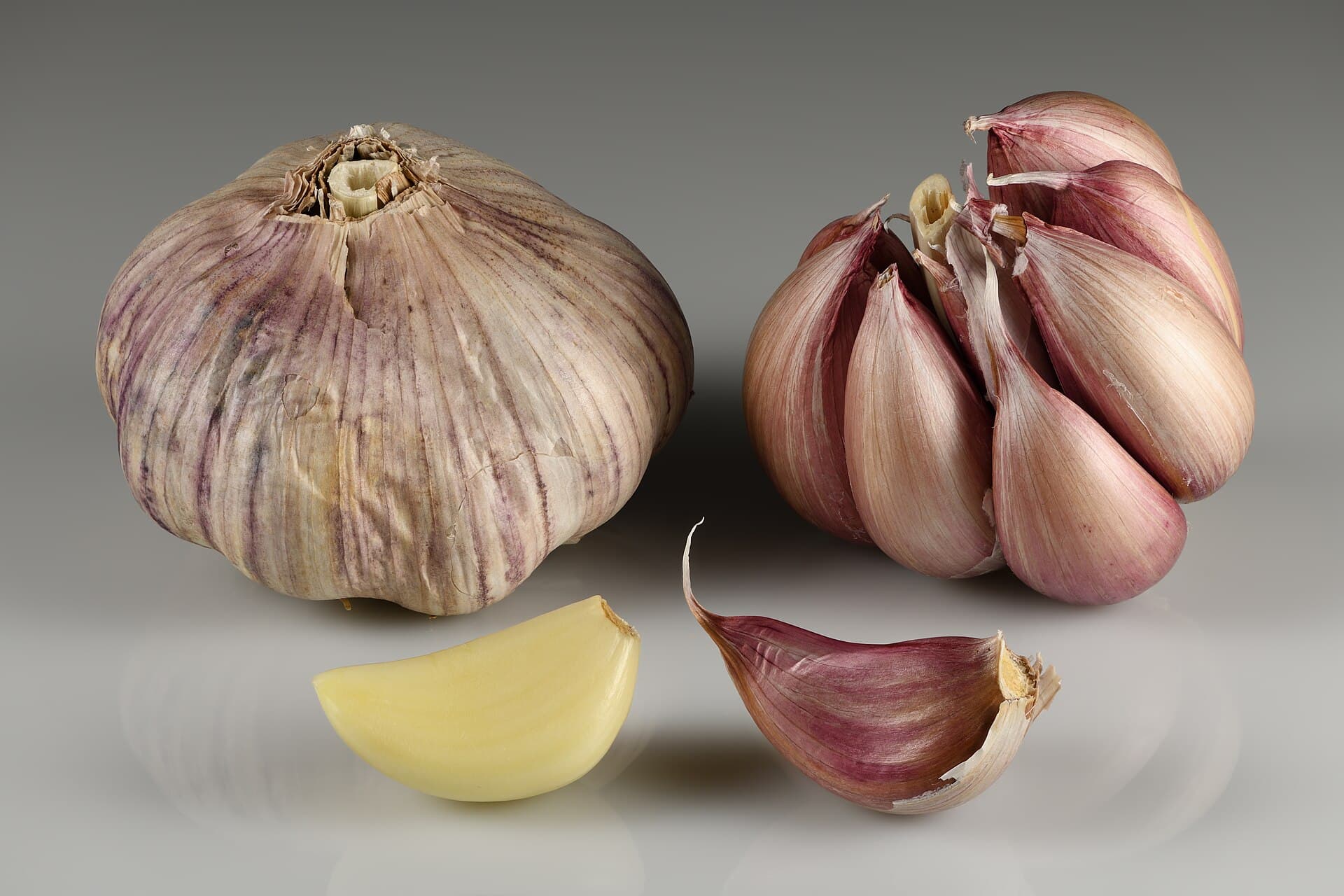
- Break the bulb the day you plant it. Separate the cloves and keep the papery skin on each one. Plant the biggest cloves from each bulb; the small ones become small bulbs and are better eaten.
- Set each clove pointy side up, two to three inches deep. Space cloves six to eight inches apart, rows about a foot apart. Garlic is a greedy plant and packed cloves grow small.
- Mulch six inches deep with straw or leaves. The mulch insulates the soil, stops frost heave, and smothers winter weeds. In a cold zone, that blanket is the difference between a bed that survives and a bed that thaws and refreezes the cloves out of the ground.
- Mark the bed. A garlic bed looks empty all winter, and every gardener forgets where it was by March. Four stakes and a string save you from stabbing a pitchfork through a clove.
The Oldest Garlic Story in the Book
Humans have been planting garlic on this same autumn schedule for a very long time. Archaeologists working at the Giza workers’ village — the settlement of the men who built the pyramids — have found garlic and onions among the daily rations of the builders, and the Greek historian Herodotus, writing two thousand years later, recorded the same alliums in the pyramid builders’ diet. The ancient Egyptians valued garlic so highly they paid their builders with it. More than four thousand years on, the planting window has not moved, which tells you something about how well this system works.
Pick Your Garlic: Hardneck or Softneck
Hardneck varieties send up a curling flower stalk called a scape in early summer and generally produce the boldest, most flavorful bulbs, with the tradeoff that they store for a shorter window. Softnecks don’t bolt, braid beautifully, and keep for many months, which is why grocery stores almost always sell them. The old homestead standard — hardneck for flavor, softneck for storage — still holds.
Three Places to Spend Your Money
Order certified seed garlic now, while fall stock lasts. Grocery-store bulbs are often treated to stop sprouting and can carry disease into your bed, so proper seed garlic is the one purchase that protects your whole season.
A handheld bulb planter pulls a clean, uniform hole — the right depth every time, no kneeling and measuring. For a proper garlic bed of fifty or a hundred cloves, it turns a fiddly afternoon into a thirty-minute job.
The single best winter insurance for a garlic bed is six inches of clean straw. It holds the soil temperature steady, stops frost heave, and rots down into organic matter by spring.
What Not to Do
Do not plant peeled cloves, and do not plant supermarket garlic. Both lead to rot or disease. Do not plant into wet, heavy soil that will pool water over winter. And do not skip the mulch, thinking the variety is hardy enough — hardy tops do not save waterlogged roots.
The Bottom Line
Garlic pays you forward. Put cloves in the ground two to four weeks before freeze-up, mulch them well, and the bed basically runs itself until June. Ancient builders got the same deal four thousand years ago, and it has not changed since.
Dig your bed with the free garden planner and check your frost dates by zone, then get those cloves in the ground on time this year.
Photo: Garlic bulbs and cloves, via Wikimedia Commons (CC BY-SA 4.0). This post contains affiliate links — we may earn a commission at no extra cost to you.