🥕
Tending the crop…
Stay ahead of the 2027 growing season — first month free on any plan until January 1st
Tending the crop…
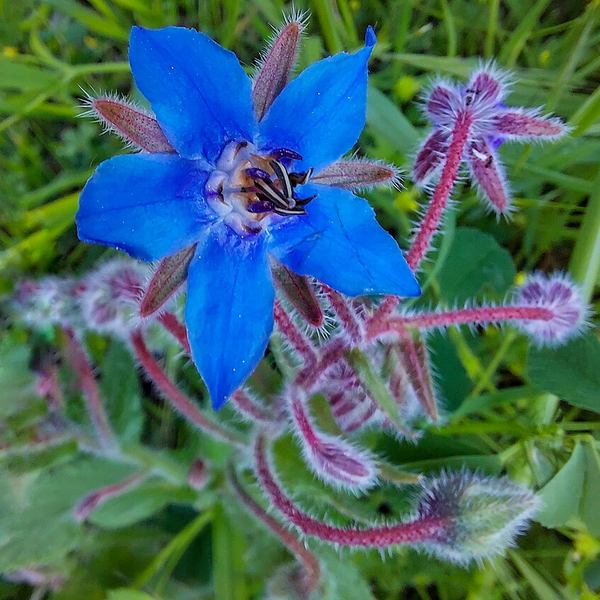
The cucumber-flavored blue star flower — a bee magnet that self-sows forever. Plant near tomatoes, squash, and strawberries; the pollinators it draws are the whole point.
One borage plant produces roughly 0 lbs. Worth $0.00 vs a $3.49 seed cost.
Lineages for your homestead goals
The standard — 3-foot plant, blue star flowers, nonstop summer bloom.
A rare white-flowered form — ornamental and just as bee-friendly.
A compact garden form that behaves better in small beds.
Soil · Water · First 30 days · Monthly care · Troubleshooting · Harvest
Light, well-draining soil, any fertility. pH 6.0–7.5. Borage is a self-sowing annual that thrives in poor, dry ground — the very spots where other herbs sulk. Native to the Mediterranean, it's happiest where water drains fast.
1/2 inch per week; mature borage laughs at drought. Its deep taproot finds water while shallow plants wilt beside it. Avoid rich, wet soil — that's how you get mildew.
Borage in full sun with sharp drainage rarely mildews. If it does, thin plants and resist watering the leaves.
🌿 Find remedies →A single plant is 3 feet across by fall. Give it room or grow the dwarf variety. Yank volunteers early — young plants pull easily; established taproots don't.
🌿 Find remedies →That's maturity, not sickness — borage is a fast-lived annual. Let it seed itself out and enjoy the volunteers.
🌿 Find remedies →Harvest flowers fresh all summer for salads, desserts, and drinks. Pick leaves young and tender for cucumber-flavored tea or salads — old leaves get hairy and bristly.
Flowers are best fresh — they wilt quickly. Freeze individual flowers in ice cubes for drinks. Leaves dry poorly; use them fresh or freeze whole for tea.