🥕
Tending the crop…
Stay ahead of the 2027 growing season — first month free on any plan until January 1st
Tending the crop…
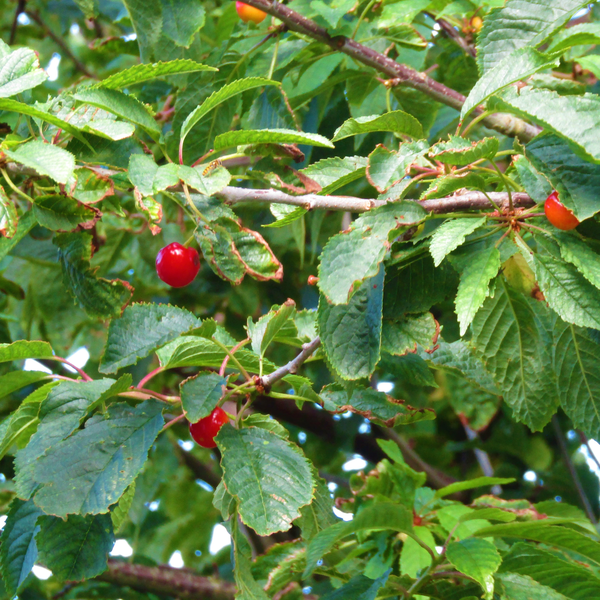
Sweet cherries need a pollination partner; sour types are self-fertile. Choose dwarf or semi-dwarf for small spaces.
One cherry tree plant produces roughly 30 lbs. Worth $149.70 vs a $29.99 seed cost.
Lineages for your homestead goals
The classic sweet cherry; deep red, juicy, and the most planted variety in America.
A yellow-and-red blush cherry prized for its extra-sweet, low-acid flavor.
The standard sour cherry for pies and preserves; self-fertile and cold-hardy.
A self-fertile sweet cherry that needs no pollination partner.
Soil · Water · First 30 days · Monthly care · Troubleshooting · Harvest
Well-draining, fertile loam. pH 6.0–7.0. Cherries hate wet feet — on heavy clay, plant on a raised mound or slope. Sweet cherries need deeper, better-drained soil than sour types.
1–2 inches per week during establishment. Mature trees: deep water every 2–3 weeks during dry spells. Water at the base and keep foliage dry to reduce fungal disease.
Net the canopy as soon as fruit starts to color. Reflective tape and fake owls help briefly; netting is the only reliable defense.
🌿 Find remedies →Remove all mummified fruit in winter. Prune for airflow. Apply fungicide at bloom if the disease has been a problem before.
🌿 Find remedies →Hang yellow sticky traps in late spring. Pick up all fallen fruit. A weekly spinosad spray during the egg-laying window controls larvae.
🌿 Find remedies →Cherries ripen over two weeks — pick when fully colored and sweet. Cut the stem with garden scissors, leaving it attached. Handle gently; bruised cherries rot fast.
Refrigerate unwashed cherries up to one week. Freeze pitted cherries in a single layer, then bag for up to 12 months. Or can them for pie filling.