
I'll tell you straight where this method comes from, because I think the origin matters more than the marketing. Square foot gardening hit it big in the 1970s on Mel Bartholomew's show, and it's been the standard answer to "small yard, want food" ever since. But the instinct behind it is a lot older, and that's the part worth stealing.
In the early 800s, Charlemagne sent out his farm managers with a written list of everything a royal estate should grow — the Capitulare de villis — and that list runs to roughly a hundred herbs, vegetables, and fruits, all meant to be grown in compact, carefully managed plots. Nobody back then had a 4×4 grid, but they'd figured out the same thing: when space is tight, you organize the ground into small, reachable units and treat each one as its own tiny garden. That's the whole secret. It's a medieval kitchen-garden idea wearing a 1970s gridded frame.
How the Method Actually Works
You take a raised bed, divide it with a grid into 12-inch squares, and plant each square on its own schedule. One square gets a single tomato. Another gets four heads of lettuce. Another gets sixteen carrots. Nothing competes for elbow room, you never tread on soil you're growing in, and you always know exactly what's where and when it's coming out.
The math is genuinely small. A 4x4 bed is sixteen squares. That one box, done right, can carry a surprising amount of a single person's summer salad — and it's forgiving for a beginner because every square is a defined problem.
Why the Grid Beats the Row
The grid is not decoration, it's the mechanism. Rows force you to plant in ribbons and then walk down them, packing soil as you go and weeding paths you don't need. Square foot inverts that: the bed is never compacted because you don't step in it, the spacing is dense enough to shade out weeds, and the grid gives you a hard answer to "how much do I plant of this" every single time.
I won't pretend it's frictionless. The honest con is that it flushes you to actually replant squares as you empty them. The method is diligent work, not automatic. If you pull a square and nothing goes back in it, you've just created the one tiny weed farm the system usually prevents.
Building the Bed Without Overthinking It
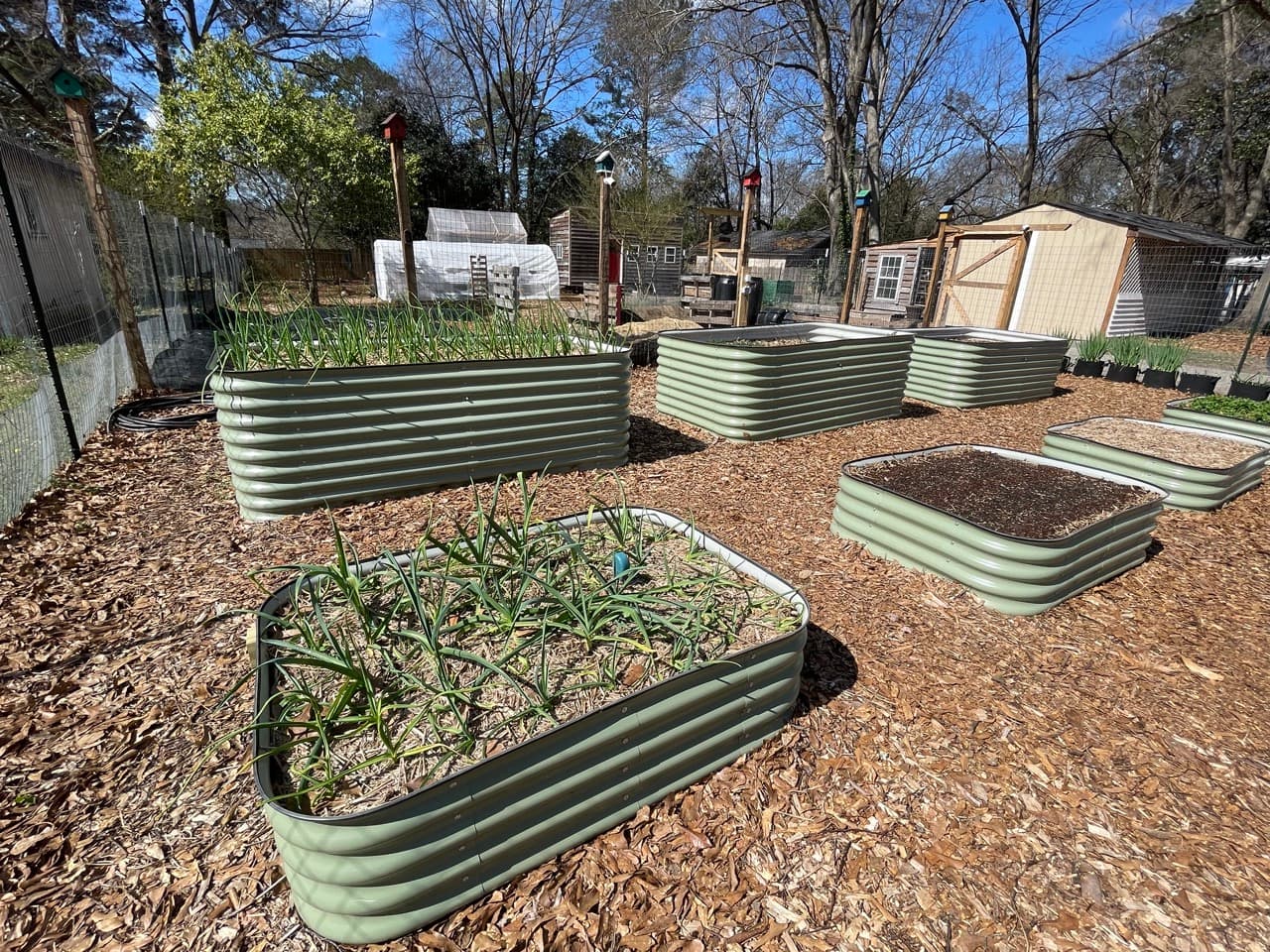
Keep it simple the first year. A deep bed — sides 11 or 12 inches at least — handles carrots and beets, which won't grow straight in a shallow frame. Cedar is the classic. It resists rot without treatment and a good kit goes together in an afternoon, the caveat being cost.
The bed I'd actually buy
A deep cedar kit, roughly cedar raised bed kit on Amazon. The con? Western red cedar is a real ingredient, not a label — some cheap "cedar" boards are a blend that will be lumber in three years. If your budget's tight, a metal kit lasts longer but the thin rim can cook roots in a full July, so mulch hard.
The Soil Mix That Carries You
Ground dirt in a raised bed is a fast path to disappointment — it densifies so it dries into brick or holds water like a swamp, depending on the week. A raised bed wants a blend that does both at once: holds moisture and air, doesn't pack down mid-summer. The classic ratio runs about a third compost, a third something coarse and water-holding, and a third fine drainage material. That's a forgiving balance, which is what a gardener needs in year one
Buy soil in volume, not in little bags at the nursery. The same cubic feet at a landscape yard runs a third of what the pre-bagged bags cost, and the honest con of building your own mix is the upfront effort. It's worth it before you plant anything.
The Spacing Numbers You Actually Need
Here's every real rule the grid forces on you
- 1 per square: tomatoes, broccoli, cabbage, a single pepper or eggplant.
- 4 per square: leaf lettuce, chard, bush beans, basil.
- 9 per square: spinach, beets tight, bush beans in a pinch.
- 16 per square: carrots, radishes, onions, arugula. This is where the method shines.
Plant toward the top of each square, and don't let the big plants step on their neighbors. The grid never lies about your limits, and that's the point.
Watering Without the Panic
Raised beds dry out faster than ground rows, period — the walls give everything a way out. Water deep in the morning, not a night sprinkle that attracts slugs. If you're gone all day, a simple drip kit on a timer quietly retires the daily chore and the mid-August shrivel horror.
The Honest Con List
- It costs more per square foot than ground rows. You're paying for drainage, reach, and soil control. Fair, but real.
- It's not a winter-storage system. Sixteen squares of greens won't fill a root cellar.
- It demands replanting. Empty squares invite weeds fast.
None of those are reasons to skip it. But they're the difference between using the method and being used by it.
Plan the Whole Season Before You Fill the Box
Drop your bed size and crop list into the garden planner and figure out the real fill cost before you click buy. Map your zone first with the zone lookup so you're not hauling soil you don't need. Square foot gardening isn't magic — but done honestly, it is one of the best and most confident ways to put food on the table from a patch of ground smaller than a parking space.
This post contains an affiliate link; we may earn a commission at no extra cost to you.